
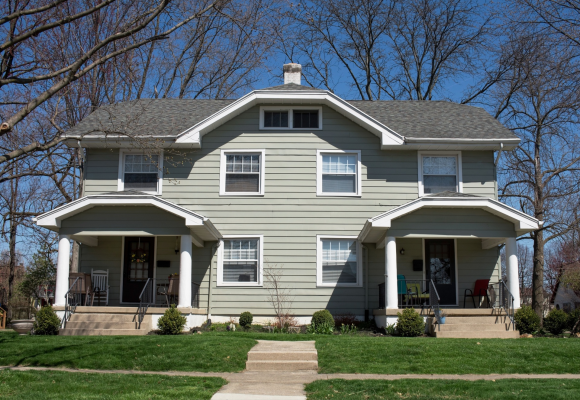
Buying a duplex gives you the opportunity to live in one unit while renting the other. Sometimes called house hacking, this strategy can help offset part of your housing expenses while allowing you to own a property with rental income potential.
But rental income is not guaranteed, and duplex ownership comes with responsibilities that a traditional single-family home does not. Before buying, understand the financing, expenses, rental market, and realities of becoming a landlord.
Why Buy a Duplex and Live in One Side?
The primary appeal is that rent from the second unit can help offset your mortgage and other property expenses. At the same time, your mortgage payments can build equity as you pay down the loan.
A duplex can also provide an entry point into rental property ownership without requiring you to purchase a separate investment property. Because you occupy one unit as your primary residence, owner-occupied financing options may be available.
Explore Owner-Occupied Duplex Financing
Financing a duplex can differ from financing a single-family home. Conventional financing may be available for qualified borrowers purchasing a two-unit primary residence. FHA financing can also allow eligible borrowers to purchase an owner-occupied duplex with a minimum 3.5 percent down payment when applicable requirements are met.
Eligible Veterans may also use VA financing to purchase certain multifamily properties with up to four units, provided the Veteran occupies one unit as a primary residence and other VA and lender requirements are satisfied.
Down payment, reserves, credit, income, and other requirements depend on the mortgage program and borrower profile.
Can Rental Income Help You Qualify for a Duplex?
Potentially. Mortgage guidelines may allow lenders to consider qualifying rental income from the unit you will not occupy.
For example, current Fannie Mae guidelines allow rental income from a two-to-four-unit principal residence when the borrower occupies one unit. When qualifying rent is based on a lease or eligible market rent documentation, the lender generally calculates 75 percent of gross monthly rent, with the remaining 25 percent accounting for vacancy and ongoing maintenance.
That does not mean every borrower can automatically use projected rent to qualify. Documentation requirements and the treatment of rental income vary based on the loan program and individual circumstances.
Find a Duplex With Strong Rental Potential
Evaluate the property as both your home and a potential rental. Research comparable rents in the neighborhood rather than relying only on the seller's estimate of what the second unit could generate.
Consider proximity to employment, transportation, shopping, schools, and other amenities that may matter to prospective tenants. Also examine each unit's condition, utilities, parking, entrances, and privacy.
For Florida properties, investigate homeowners insurance, flood exposure, property taxes, and maintenance needs early. These expenses can materially affect the economics of owning the duplex.
Calculate the Real Cost of Duplex Ownership
Do not compare expected rent only with your monthly mortgage payment. Develop a budget that considers the complete cost of owning and operating the property.
- Mortgage principal and interest
- Property taxes
- Homeowners and applicable flood insurance
- Utilities paid by the owner
- Repairs and routine maintenance
- Vacancy periods
- Major replacements and unexpected expenses
A tenant can move out, rent can arrive late, and an air conditioner or roof can require an expensive repair. Make sure the property remains manageable even when rental income is temporarily interrupted.
Understand Your Responsibilities as a Landlord
Living next door to your tenant can make it easier to monitor and maintain the property, but it also means becoming a landlord where you live.
You may be responsible for repairs, tenant communications, lease administration, security deposits, and compliance with applicable landlord-tenant and fair housing laws. Florida landlords should understand current state requirements as well as any applicable local regulations.
Before buying, decide whether you are comfortable handling these responsibilities yourself or whether professional property management should be included in your budget.
Screen Tenants Carefully and Lawfully
A reliable tenant can make duplex ownership much easier. Establish consistent written screening criteria and follow applicable fair housing and consumer reporting requirements.
Depending on your screening process, you may review income, rental history, credit information, and other legally permissible factors. Use a written lease that clearly addresses rent, deposits, maintenance responsibilities, property rules, and other important terms.
Because landlord-tenant laws can be detailed, consider obtaining appropriate legal guidance when creating leases and screening procedures.
Is Buying a Duplex Right for You?
A duplex may be worth considering if you want to own your primary residence while gaining experience as a landlord. Rental income can help offset housing expenses, but you should not assume the second unit will always be occupied or cover a particular percentage of your mortgage.
Before making an offer, compare expected rent with the property's complete expenses, maintain appropriate financial reserves, and understand the financing requirements for an owner-occupied multifamily property.
Getting Started With Duplex Financing
The first step is understanding how much you may qualify to borrow and how potential rental income will be treated under the mortgage program you are considering.
Loan Wolf Lending can help Florida homebuyers explore financing for an owner-occupied duplex and determine which mortgage options may fit their circumstances. Call 754-755-3075 to discuss your homebuying plans.