
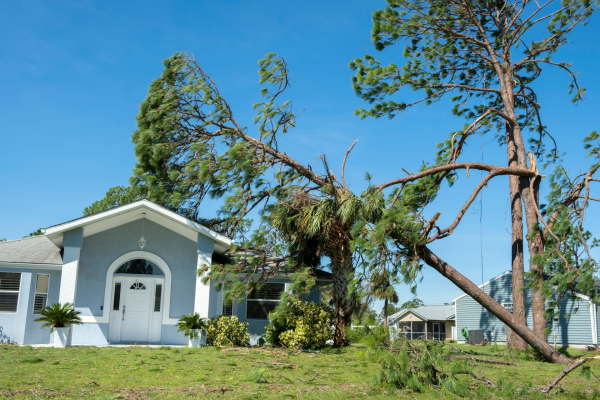
When buying a home with a mortgage, your lender will generally require proof of homeowners insurance before closing. You may also hear your lender or mortgage documents refer to this coverage as hazard insurance.
Hazard insurance protects the property against certain covered losses. Because your home also serves as collateral for the mortgage, lenders require appropriate insurance coverage to protect the property securing the loan.
What Is Hazard Insurance?
Hazard insurance generally refers to the portion of homeowners insurance that protects the physical structure of your home against covered hazards or perils.
Depending on the policy, covered events may include fire, smoke, theft, vandalism, wind, or certain storms. The exact protection depends on the insurance policy, exclusions, deductibles, and endorsements, so buyers should review their actual coverage rather than assuming every type of damage is insured.
In everyday mortgage terminology, lenders and servicers may use the terms hazard insurance, homeowners insurance, or property insurance when discussing required coverage.
Why Do Mortgage Lenders Require Hazard Insurance?
Your home is collateral for your mortgage. If it were seriously damaged or destroyed by a covered event, the property's value could be significantly affected.
Requiring insurance helps protect the lender's financial interest in the property while also providing important protection for the homeowner. According to the Consumer Financial Protection Bureau, lenders generally require borrowers to maintain homeowners insurance when they have a mortgage.
You will typically need to provide evidence of acceptable insurance coverage before your mortgage can close.
What Does Homeowners Insurance Cover?
A homeowners policy typically provides more protection than the dwelling coverage commonly associated with the term hazard insurance. Depending on your policy, coverage can include:
- Damage to the home's structure from covered events
- Personal belongings, subject to policy terms and limits
- Personal liability coverage
- Additional living expenses after certain covered losses
- Other structures on the property, when covered
Coverage varies significantly among policies. Review the declarations page, exclusions, coverage limits, deductibles, and endorsements with a licensed insurance professional so you understand what your policy actually provides.
Is Hazard Insurance the Same as Mortgage Insurance?
No. Hazard or homeowners insurance and mortgage insurance serve different purposes.
Homeowners insurance protects the property and can provide other coverage to the homeowner under the policy. Mortgage insurance, by contrast, generally protects the mortgage lender if the borrower fails to repay the loan.
Depending on the mortgage program and down payment, mortgage insurance may be required in addition to homeowners insurance.
Does Hazard Insurance Cover Flooding?
Standard homeowners insurance generally does not cover flood damage. Florida's Department of Financial Services specifically advises consumers that flood damage is not covered by a homeowners insurance policy.
Homebuyers may need a separate flood insurance policy. Depending on the property's location and mortgage requirements, flood insurance may also be required by the lender.
Florida buyers should investigate flood exposure and the potential cost of coverage before closing, even when a separate flood policy is not required for the mortgage.
How Is Homeowners Insurance Paid With a Mortgage?
Many borrowers pay homeowners insurance through a mortgage escrow account. In that arrangement, part of the monthly mortgage payment is placed into escrow, and the mortgage servicer uses those funds to pay the insurance premium when it becomes due.
Other borrowers may pay their insurance directly, depending on the mortgage and applicable requirements.
Even when insurance is paid through escrow, premiums can change. An increase in homeowners insurance costs can therefore cause the total monthly mortgage payment to increase.
What Happens if Your Homeowners Insurance Lapses?
Maintaining required coverage is important after closing. If your mortgage servicer has a reasonable basis to believe you failed to maintain the hazard insurance required by your mortgage agreement, it may obtain force-placed insurance and charge you for it after providing required notices.
Federal mortgage servicing rules generally require an initial written notice at least 45 days before a servicer assesses a force-placed insurance premium or fee.
Force-placed coverage may cost significantly more and may provide less protection than a policy you obtain yourself. If you receive a notice about missing or expired insurance, contact your insurer and mortgage servicer promptly.
Florida Homebuyers Should Shop for Insurance Early
Insurance can be an important part of the homebuying budget, particularly in Florida. The property's location, age, roof, construction, wind exposure, flood risk, coverage selections, deductibles, and other factors can affect insurance availability and cost.
Do not wait until the final days before closing to investigate coverage. Obtain quotes early and provide them to your loan officer so you can confirm that the policy meets the lender's requirements and include the estimated premium in your housing budget.
The Bottom Line on Hazard Insurance
If you finance a home, appropriate property insurance will generally be required for the life of the mortgage. Hazard insurance protects against certain risks to the property, while a broader homeowners policy may include additional protections for belongings, liability, and living expenses.
Before buying, understand what your policy covers, what it excludes, your deductibles, and whether additional coverage such as flood insurance should be considered.
Loan Wolf Lending can help Florida homebuyers understand how homeowners insurance fits into mortgage qualification and estimated monthly housing costs. Call 754-755-3075 to discuss your home financing options.