
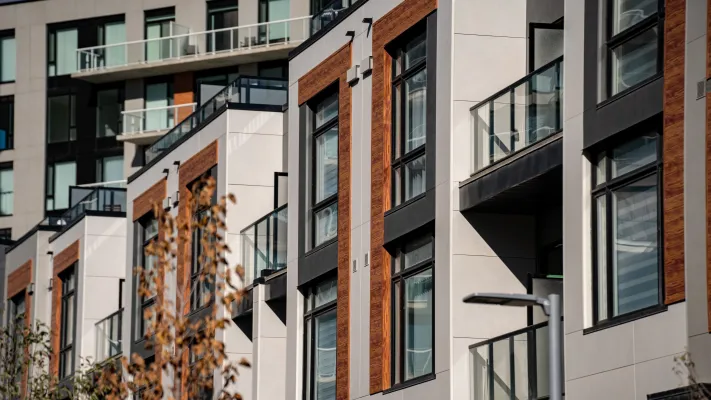
Multifamily real estate can give buyers an opportunity to own multiple housing units within one property. Depending on the property and financing, rental income from the additional units may help offset housing expenses or contribute to an investment strategy.
But multifamily ownership also comes with added responsibilities. Vacancy, repairs, insurance, property management, financing requirements, and unpredictable expenses can all affect the results. Before buying, it is important to understand both the potential benefits and the risks.
What Is a Multifamily Property?
A multifamily property contains more than one separate residential unit. Common examples include duplexes, triplexes, fourplexes, and larger apartment properties.
For mortgage purposes, the number of units matters. Properties with two to four units may qualify for certain residential mortgage programs. Properties with five or more units are generally financed differently and may require commercial or multifamily financing.
Occupancy also matters. Financing a duplex as your primary residence can involve different requirements from purchasing the same property strictly as an investment.
Why Do Investors Buy Multifamily Real Estate?
One potential advantage is having more than one source of rental income within a single property. If a four-unit building has one vacant unit, for example, the remaining occupied units may continue producing rental income.
Owning several units at one location can also simplify some aspects of maintenance and management compared with owning multiple single-family rentals in different locations.
However, multiple units do not guarantee positive cash flow or profitability. The property's income still needs to be evaluated against the mortgage, taxes, insurance, maintenance, vacancy, utilities paid by the owner, management costs, and other expenses.
Can You Live in One Unit and Rent the Others?
Yes. Buying a two-to-four-unit property, occupying one unit as your primary residence, and renting the remaining units is sometimes called house hacking.
This approach can open the door to financing options that may not be available when the entire property is purchased strictly as an investment.
Current conventional programs can allow financing on qualifying two-to-four-unit primary residences with loan-to-value ratios as high as 95 percent in certain situations. Specific down payment, borrower contribution, mortgage insurance, income, reserve, and underwriting requirements depend on the loan program.
FHA and VA financing may also be available for qualifying owner-occupied multifamily properties, subject to each program's requirements.
Can Rental Income Help You Qualify for a Multifamily Mortgage?
Potentially. Mortgage guidelines may allow qualifying rental income from the additional units to be considered when determining eligibility.
That does not mean lenders automatically count every dollar of expected rent. How rental income is calculated and documented depends on the mortgage program, appraisal, leases when applicable, occupancy, rental history, and underwriting guidelines.
If rental income is important to your qualification, discuss the property and expected financing structure with a lender before making assumptions about how much income can be used.
What Are the Risks of Multifamily Investing?
Multifamily ownership is not automatically passive income. Owners need to prepare for tenant turnover, vacancies, repairs, maintenance, property management, and unexpected expenses.
A major repair can affect several units at once. A roof replacement, plumbing problem, electrical issue, or insurance claim may create a substantial expense regardless of whether every unit is occupied.
Florida buyers should pay particular attention to property insurance, flood exposure when applicable, roof condition, wind mitigation features, and the age and condition of major building systems.
Before buying, consider whether you have sufficient reserves to continue covering the mortgage and operating expenses if rental income temporarily falls below expectations.
How Should You Evaluate a Multifamily Property?
Do not evaluate a property based only on its purchase price or advertised monthly rents. Look at the complete financial picture.
Important factors can include current and realistic market rents, vacancy assumptions, property taxes, insurance, maintenance, utilities, management expenses, financing costs, and anticipated repairs.
Investors may also use measurements such as net operating income and capitalization rate to compare properties. These calculations can be useful, but they depend heavily on accurate income and expense assumptions.
Projected appreciation or future rent increases should not be treated as guaranteed returns.
Is Multifamily Real Estate a Good Investment for You?
A multifamily property may be worth considering if you are comfortable with the financial responsibilities of owning multiple units and have a plan for managing tenants, maintenance, vacancies, and unexpected costs.
For an owner-occupant, a duplex, triplex, or fourplex can provide a way to combine a primary residence with rental units. For an investor, multifamily real estate can provide multiple potential income streams within one property.
Neither approach guarantees positive cash flow or long-term appreciation. Carefully review the property's actual numbers, financing terms, condition, location, insurance costs, and realistic rental potential before deciding.
The Bottom Line
Multifamily real estate can offer advantages, including multiple rental units and the ability for qualifying owner-occupants to explore residential financing on properties with up to four units. It also brings additional financial and management responsibilities compared with owning a typical single-family home.
The right property should make sense based on realistic income and expense assumptions, not simply the expectation that rents or property values will continue rising.
Loan Wolf Lending can help Florida buyers explore financing for qualifying multifamily properties and compare owner-occupied and investment property mortgage options. Call 754-755-3075 to discuss your financing goals.